
This article is part of the folder : Dossier "Vers des rues apaisées"
See the 33 news related to this folder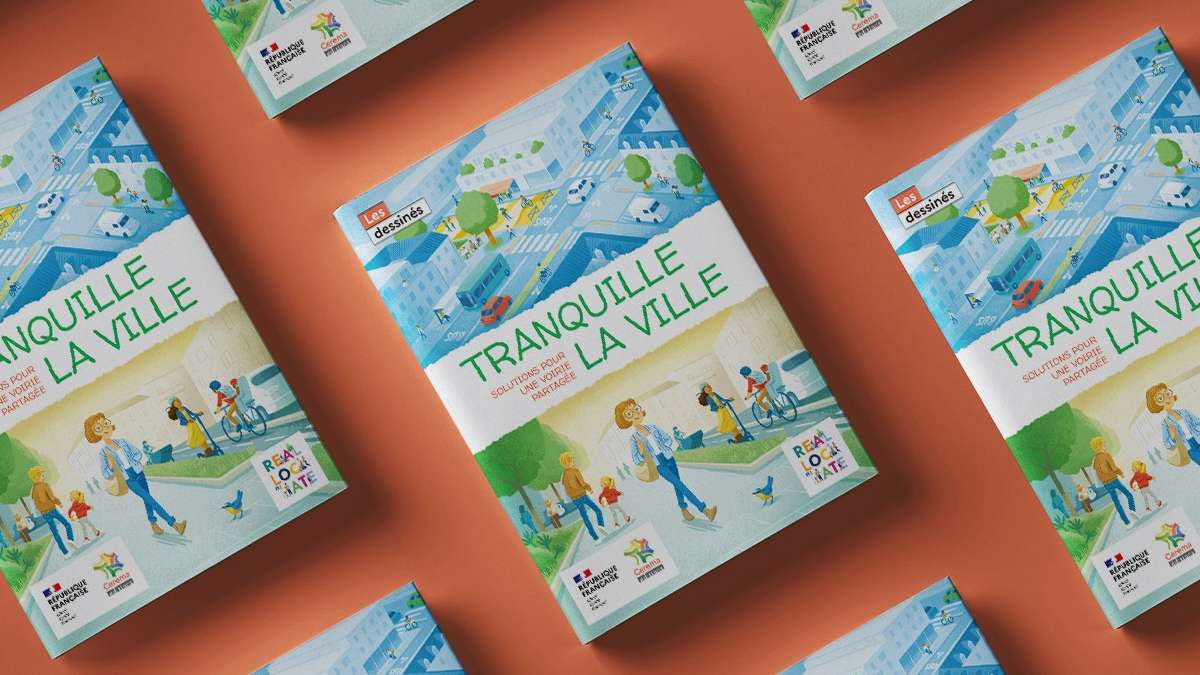
The comic book *Room for everyone: Solutions for Shared Road Space* presents findings from the European REALLOCATE research project, which brought together ten metropolitan areas from ten countries and some twenty partners—including Cerema (universities, public institutions, and companies)—whose experts in complementary fields studied the practices and conditions of shared public space.
Sharing the Road: A Visual Exploration of Challenges and Solutions

Illustrated by Mathieu Ughetti, this work is intended for a broad audience; no specialized knowledge is required to understand the issues and approaches presented. It examines the barriers and opportunities for accommodating diverse modes of travel in cities and offers ideas for a more peaceful urban environment.
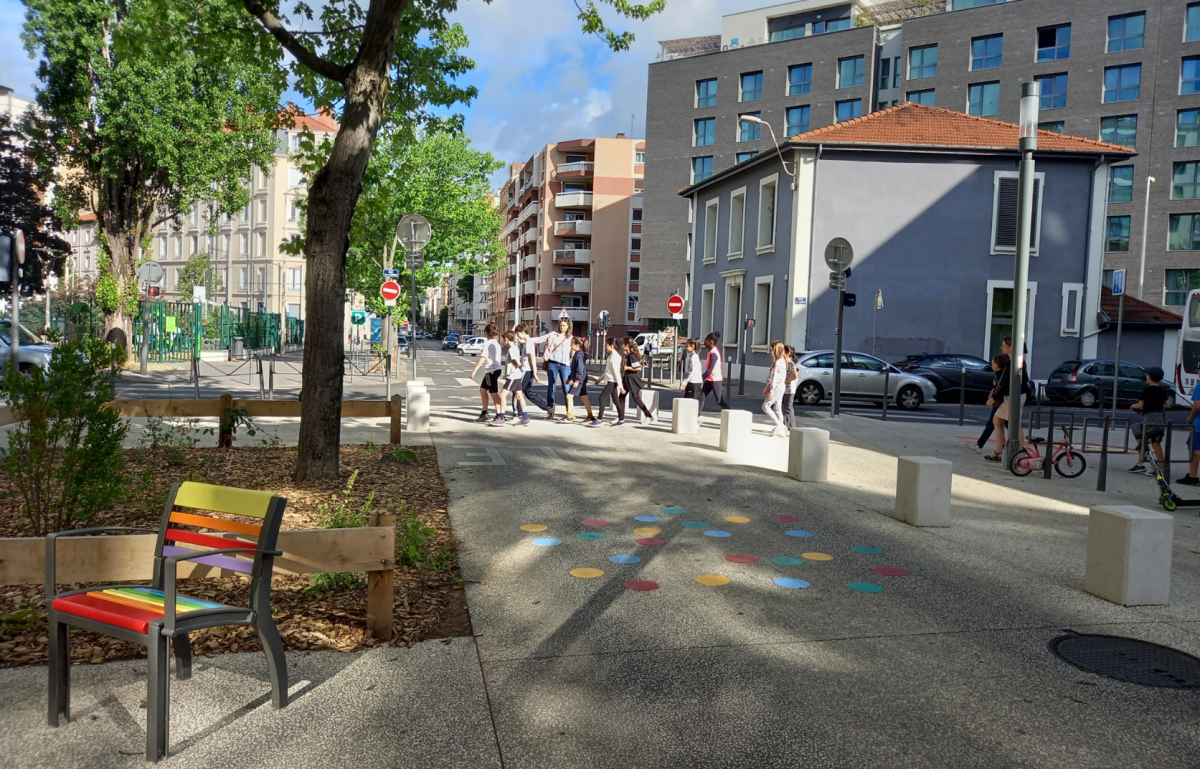
Public spaces (squares, streets, alleys, etc.) must allow for safe and efficient traffic flow and fulfill a social function. The goal is to make them welcoming for different uses and different types of users, including people with mobility challenges.
Various modes of transportation are present in public spaces, particularly in cities: public transit, cars, walking, bicycling, and scooters—including their electric versions. Lower-carbon and more active modes of transportation address other challenges such as the climate emergency, sedentary lifestyles, local pollution, and urban congestion.
Public spaces must therefore accommodate this diversity of mobility options, each with different speeds, behaviors, and needs, the coexistence of which can be a source of tension or even conflicts that create a sense of insecurity and increase the risk of accidents. Rebalancing the sharing of public space is necessary to address safety, environmental, climate, and societal challenges.

Two questions for one of the co-authors:
Davy Lorans, REALLOCATE Project Manager at Cerema, answered two questions about the process of creating the comic book and Cerema’s work:
Why did you choose to adapt the work carried out as part of the REALLOCATE project into a comic book?
As part of the Reallocate project (2024–2027), Cerema has committed to producing three guides addressing cross-cutting issues at pilot sites across 10 European metropolitan areas. Since the topic of coexistence among modes of transportation quickly emerged as central, we were asked to present it in the form of a comic book. Given the complexity of the stakeholders and real-world situations, as well as the combination of technical elements and concepts drawn from the social sciences, it became clear to us from the outset that the coexistence of road users (and users of public spaces more generally, including sidewalks, squares, etc.) would benefit from combining images with words to thoroughly analyze these everyday issues and outline possible courses of action.
Furthermore, this publication is aimed at a broad audience (elected officials, organizations, users, etc.), not only in France but in all countries covered by Reallocate (see the publication, available in English)! Hence the challenge of representing and interpreting typical cases of interaction without being influenced by specific regulations or national cultural contexts.
Furthermore, discovering the first issue of this new series from Les Dessinés with great interest (see “The Superpowers of Soil”) made the prospect of working with illustrator Mathieu Ughetti all the more appealing
What research is Cerema currently conducting on these topics?
While this topic—which lies at the intersection of mobility and the concept of living together—is still relatively under-explored in the specialized literature, we were able to draw on several studies conducted by Cerema to create this comic book. In particular, “immersive workshops” were developed with partners to support cities such as Bordeaux, Clermont-Ferrand, La Rochelle, Lille, and Montpellier.
 The idea is to put ourselves in the shoes of typical users—known as “personas”—in order to understand their interactions and work together to develop recommendations. While this service offering focuses on potential conflicts between pedestrians and cyclists, the approach was taken a step further as part of the Reallocate project: for the city of Barcelona, Cerema adapted the concept of these workshops to the Catalan metropolis, expanding the range of personas to address the specific issues identified by the city (e.g., bike couriers or tourists on scooters). Using these new tools, the City of Barcelona was able to organize a participatory workshop last November.
With “Tranquille la ville—Solutions for Shared Roadways,” we hope to offer a nuanced contribution to the topic of shared roadways, explaining that from Cerema’s perspective, there is no “ideal solution” (on one hand, total separation—one lane for each use; on the other, mixed-use, where all uses are combined), but that planning must be adapted to traffic flows and, above all, to the uses we wish to see develop.
For while the issue of “coexistence among active modes” (pedestrians and bicycles, bicycles and e-bikes, pedestrians and scooters, etc.) is still an emerging issue, it is well established that it is indeed the coexistence of motor vehicles and active modes of transportation (cars and bicycles, cars and pedestrians) that is the leading cause of serious accidents.
In the folder : Dossier "Vers des rues apaisées"